
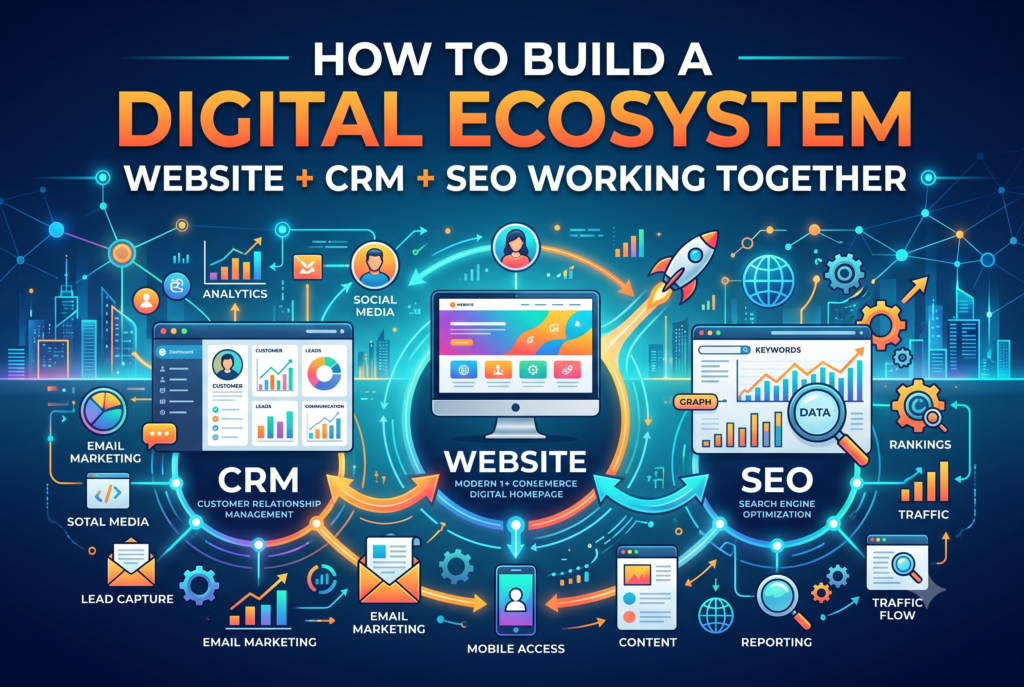
Customer relations is the ongoing practice of building trust with the people who buy from you, across every interaction your business has with them. It is not a single department’s job and it is not the same thing as answering support tickets. It is the sum of every email, every follow-up, every resolved complaint, and every small moment where a customer decides whether your business is worth sticking with.
For small and service-based businesses, this matters more than almost anything else you can invest in. Products and pricing get copied quickly. A genuine relationship with your customer base is much harder for a competitor to take away. This guide covers what customer relations actually means, how it differs from customer service and CRM, why it matters, the different types of relationships you can build, a practical framework for strengthening yours, how to measure progress, and the mistakes that quietly undo all of it.
Customer Relations vs. Customer Service: What Is the Real Difference
The two terms get used interchangeably so often that most people assume they mean the same thing. They do not, and the difference matters for how you organize your business around customers.
Customer service is reactive. A customer has a problem, they reach out, your team resolves it, and the interaction ends. It is measured in single events: a call, a chat, a ticket closed. Customer relations is proactive and ongoing. It is the strategy that sits above individual interactions and asks a bigger question: are we building trust with this customer over time, not just solving today’s problem.
| Factor | Customer Service | Customer Relations |
|---|---|---|
| Approach | Reactive | Proactive |
| Timeframe | Single interaction | Long-term relationship |
| Goal | Resolve the immediate issue | Build trust and loyalty over time |
| Who drives it | The customer reaches out | The company reaches out first |
| Scope | Tickets, calls, chats | Feedback loops, follow-ups, ongoing engagement |
Here is what that looks like in practice. A customer emails about a billing error. Customer service fixes the billing error and closes the ticket. Customer relations goes further: the agent notices this is the customer’s third contact this month, flags the account for a proactive check-in, and someone follows up a week later just to make sure everything is working smoothly. The first interaction solves a problem. The second builds a relationship.
This distinction becomes especially visible on the front end of your business. If a visitor cannot find a phone number, a contact form takes too long to load, or a chat widget goes unanswered, no amount of internal proactivity will save the relationship, because the customer never got past the first impression. A website that supports fast, responsive service is often the missing piece between traffic and an actual relationship with the people visiting your site.
Customer Relations vs. Customer Relationship Management (CRM): How They Work Together
Another common point of confusion is the relationship between customer relations and CRM, or customer relationship management. They overlap heavily but they are not interchangeable, and understanding the difference will save you from a common and expensive mistake: buying CRM software and assuming the relationships will follow.
Customer relations is a philosophy and a practice. It covers everything your business does across the customer lifecycle to build trust. CRM is the execution layer. It is both a strategy and a category of software, tools like Salesforce, HubSpot, and Pipedrive, that centralizes customer data, tracks conversations, and automates routine follow-ups so nothing falls through the cracks.
| Factor | Customer Relations | CRM |
|---|---|---|
| What it is | A business philosophy and practice | A strategy and software category |
| Scope | All touchpoints across the customer lifecycle | Tracking, organizing, and managing customer data |
| Focus | Building trust and loyalty | Centralizing information and workflows |
| Tools involved | Support software, feedback tools, communication channels | CRM platforms and integrations |
| Who owns it | Everyone in the company | Typically sales, marketing, and support teams |
Think of it this way: customer relations is the goal, and CRM is one of the tools you use to get there. A CRM system helps your team remember what a customer said last time, avoid asking them to repeat themselves, and spot patterns across your whole customer base. But the software itself does not build a relationship. Your people, and the way your business chooses to communicate, do that. The businesses that get the most value out of a CRM investment are the ones that already have a customer-first mindset behind it.
If your team is currently piecing together customer history from memory, spreadsheets, or scattered inboxes, that gap is usually the first thing worth fixing. A custom CRM automation setup gives your team the context to act on customer relations principles consistently, instead of relying on whoever happens to remember the last conversation.
Client Relations vs. Customer Relations: Is There a Difference
If you have searched for “client relations” wondering whether it means something different from “customer relations,” it does not. The two terms describe the same underlying discipline: building trust, communicating proactively, and investing in relationships that last beyond a single transaction.
The difference is mostly about industry vocabulary. “Client relations” tends to show up more often in professional services, consulting, legal, financial, and other B2B contexts, where the word “client” is the industry standard. “Customer relations” is more common in SaaS, retail, and ecommerce, where “customer” is the default term. Use whichever word fits your industry and your customers’ expectations, but do not treat them as two separate strategies. The practice underneath both is identical.
Why Customer Relations Matters for Small and Service-Based Businesses
Strong customer relations is not a soft, nice-to-have benefit. It shows up directly in the numbers that determine whether a small business grows or struggles. Acquiring a new customer typically costs several times more than keeping an existing one, and even a modest improvement in retention can produce an outsized increase in profit, since retained customers cost less to serve and tend to spend more over time. That single relationship between retention and profitability is the reason companies that invest seriously in customer relations consistently outperform those that focus only on bringing in new leads.
Higher Retention Rates
Customers who feel genuinely valued stay longer, and small increases in retention compound into meaningful profit gains over time, because the cost of keeping a customer is almost always lower than the cost of replacing one.
More Revenue per Customer
Customers who trust you spend more. They upgrade, they buy again, and they say yes faster the next time, because the sales conversation does not have to start from zero.
Stronger Word of Mouth
People trust a recommendation from someone they know far more than any ad. A customer who feels well treated becomes a source of new business that costs you nothing beyond the relationship you already built.
Lower Support Costs
Proactive relationship building heads off problems before they escalate into tickets. When customers already trust that you will tell them about issues before they have to ask, the volume and intensity of support requests drops.
Competitive Advantage for Small Businesses
Small businesses actually hold an advantage here. With a smaller customer base, you can remember names, recall preferences, and respond faster than a large competitor ever could. For many service-based businesses, the relationship itself, not the price or the product, is the reason customers stay.
None of this happens by accident, and it rarely happens through customer service alone. It comes from a deliberate strategy that treats every touchpoint, including your website, your follow-up emails, and your onboarding process, as part of the same relationship. Businesses that treat these as separate, disconnected efforts tend to see the cracks show up exactly where customers notice most: a slow website, an inconsistent follow-up, or a support answer that contradicts what marketing promised.
The businesses that get this right tend to share one trait. They do not wait for a customer relations problem to appear before they invest in fixing it. They build the systems, the website experience, the CRM, the follow-up cadence, before the volume of customers makes informal effort impossible to sustain. A digital growth strategy built around retention treats these touchpoints as one connected system rather than a series of disconnected tactics, which is usually the difference between a business that scales its relationships and one that quietly loses them along the way.
6 Types of Customer Relationships Every Business Should Know
Not every business builds relationships the same way, and the right approach depends on your product, your industry, and what your customers actually expect from you. Most businesses use a mix of the following, rather than relying on just one.
Transactional
The customer buys, the interaction ends, and there is little ongoing contact. A one-time service call or a simple retail purchase fits this model. The priority here is speed and convenience, not depth of relationship.
Personal Assistance
A customer interacts directly with a person on your team, before, during, or after a purchase. This is common in professional services and higher-touch retail, where a customer expects to speak with someone who understands their specific situation.
Dedicated Account Management
Each customer or client is assigned a specific point of contact who knows their history and goals. This is the deepest form of one-to-one relationship and is typical in consulting, agencies, and higher-value service contracts.
Self-Service
You give customers the tools to solve their own problems: a help center, FAQs, or clear how-to content. Many customers genuinely prefer this option because it is fast and does not require waiting on a reply.
Community-Based
Customers connect with each other, not just with your business, through a forum, a social group, or shared events. This builds loyalty without requiring your team to manage every single interaction directly.
Co-Creation
Customers help shape what you offer, through feedback requests, beta testing, or simply being asked what they want next. People who feel like they influenced a business tend to stay attached to its success.
Self-service in particular depends heavily on how your site is actually built. Clear navigation, findable answers, and a contact path that does not disappear into a broken form all determine whether self-service works or quietly frustrates people. A customer who cannot find a simple answer on your site does not conclude that your content is missing. They conclude that your business is hard to deal with, and that impression sticks regardless of how good your actual product or service is. Self-service resources through a well-built website are often the difference between a customer finding their own answer in thirty seconds and giving up entirely, and giving up is rarely silent. It shows up later as a support ticket, a lost sale, or a customer who simply does not come back.
Most businesses do not need to pick a single type from this list and commit to it exclusively. A service-based business might run mostly on personal assistance for active clients, self-service content for common questions, and a small community or referral network for word-of-mouth growth. The right combination depends on what your customers actually expect, and that expectation is usually shaped by your industry and the size of the relationship, not by what looks impressive on paper.
How to Build Positive Customer Relations: A 5-Step Framework
Improving customer relations does not require a complete overhaul. It requires consistency across a small number of things, done well and done repeatedly.
1. Understand customer needs before they ask. You cannot build a relationship with someone you do not understand. Talk to customers directly, review support conversations for patterns, and pay attention to what people are asking for even when they are not filing a complaint.
2. Communicate proactively and consistently. If something is going to be late, broken, or delayed, tell the customer before they have to ask. A short heads-up email builds more trust than a perfect explanation delivered after the fact.
3. Personalize every interaction. Use the customer’s name, reference their history, and follow up on things they mentioned before. Small, specific details show a customer they are a person to you, not a ticket number.
4. Close the feedback loop visibly. When a customer tells you something is broken or missing, fix it if you can, and then tell them you fixed it. Customers who see their feedback lead to real change become far more invested in the relationship.
5. Set honest expectations instead of overpromising. Nothing damages trust faster than a promise you cannot keep. If a fix will take two days, say two days. If you cannot do exactly what a customer wants, explain why and offer the closest real alternative.
Steps two and four in particular are difficult to sustain manually once you have more than a handful of customers. Early on, proactive follow-up feels manageable because you remember every customer by name. Once your customer base grows past a certain point, that same follow-up either has to become a documented process or it quietly disappears, usually without anyone deciding to let it go. This is where good intentions and an actual system start to diverge. Automating client onboarding and follow-ups makes proactive communication and feedback follow-up something your business does by default, rather than something that only happens when someone remembers, which is exactly the gap that tends to open up as a business grows past its earliest, most attentive stage.
How to Measure Customer Relations: 6 Key Metrics
You cannot improve what you never measure, and customer relations is no exception. These six metrics give you a practical read on whether your relationships are actually getting stronger.
| Metric | What It Measures |
|---|---|
| Net Promoter Score (NPS) | How likely a customer is to recommend you, on a scale that runs from -100 to 100 |
| Customer Satisfaction Score (CSAT) | Satisfaction with one specific interaction, usually on a simple 1 to 5 scale |
| Customer Retention Rate | The percentage of customers who stay with you over a given period |
| Customer Lifetime Value (CLV) | The total revenue a customer is expected to generate across the entire relationship |
| Customer Effort Score (CES) | How easy or difficult it is for a customer to get help or complete a task |
| Churn Rate | The percentage of customers you lose over a given period, the inverse of retention |
Net Promoter Score (NPS)
A single question, how likely are you to recommend us, gives you a fast read on overall sentiment. Scores above 50 are generally considered excellent, and tracking the trend quarter over quarter matters more than any single snapshot.
Customer Satisfaction Score (CSAT)
CSAT zooms in on one specific moment, like a support interaction or a purchase, rather than the overall relationship. It is the fastest way to catch a specific touchpoint that is quietly frustrating people.
Customer Retention Rate
This tells you, in plain terms, whether people are staying. A declining retention rate is one of the earliest and clearest warning signs that something in your customer relations approach needs attention.
Customer Lifetime Value (CLV)
CLV estimates how much revenue a customer will generate over the full length of their relationship with you. When your customer relations efforts are working, this number tends to rise, because loyal customers spend more over time.
Customer Effort Score (CES)
CES asks a simple question: how much work did the customer have to do to get what they needed. Lower effort consistently correlates with stronger loyalty, since frustration and friction are two of the fastest ways to lose a customer.
Churn Rate
Churn is retention’s mirror image. Rising churn is a signal worth investigating immediately, because it usually points to a specific, fixable breakdown somewhere in the relationship, not a vague, unsolvable problem.
7 Common Customer Relations Mistakes to Avoid
Knowing what undermines customer relations is just as important as knowing what strengthens it. These are the mistakes that quietly erode trust, often without anyone on the team noticing until retention numbers start slipping.
- Treating every customer the same. A brand-new customer and a five-year loyal one have different expectations. Segment your approach and give long-term customers real, noticeable extra attention.
- Ignoring negative feedback. A complaint is specific, actionable information about exactly what to fix. Businesses that dismiss it lose customers to competitors who actually listen.
- Over-relying on automation. Automated replies and chatbots are useful for routine tasks, but they cannot replace a real person for anything complex or emotionally charged. Overusing automation replaces trust with friction.
- Measuring activity instead of outcomes. Counting emails sent or calls made tells you nothing about whether relationships are improving. Track retention, satisfaction, and repeat business instead.
- Not empowering front-line staff. If your team needs manager approval for every small decision, customers notice the delay and the rigidity. Give reasonable discretion to the people talking to customers every day.
- Inconsistent communication across channels. A customer who gets a different answer by email than they got by phone loses confidence fast. Consistency across every channel is one of the strongest predictors of trust.
- Slow response times. Speed matters more than most businesses assume. A fast acknowledgment that a request has been received builds more trust than a perfect answer that arrives three days later.
The over-reliance on automation is worth a closer look, because the instinct to automate is usually right, the execution is where it goes wrong. Automation should remove friction and speed things up, not replace the personal touch that makes a relationship feel real. The businesses that get this wrong tend to automate the parts of the relationship that actually needed a human, while leaving the repetitive, low-stakes tasks to be handled manually, which is the opposite of where automation adds value. A marketing automation strategy that still feels personal is built around that distinction rather than treating automation and personalization as opposites, using automation to handle the repetitive groundwork so your team’s time goes toward the conversations that actually need a person.
Frequently Asked Questions About Customer Relations
What does customer relations mean in simple terms?
Customer relations means the ongoing effort a business makes to build trust with its customers across every interaction, not just when something goes wrong. It covers everything from how you follow up after a sale to how you handle a complaint.
What is the difference between customer relations and customer service?
Customer service is reactive: a customer has a problem, you solve it, the interaction ends. Customer relations is proactive and ongoing: you communicate before problems arise and invest in the relationship over the long term, not just in a single interaction.
Is customer relations the same as CRM?
No. Customer relations is the broader philosophy and practice of building trust with customers. CRM, or customer relationship management, is the strategy and software used to track and organize customer data and interactions. CRM supports customer relations, but the software alone does not create the relationship.
Can a small business have good customer relations without CRM software?
Yes. Many small businesses build strong relationships through direct attention alone, remembering names, following up personally, and responding quickly. That said, a CRM system built for how your team actually works makes those habits far easier to sustain once you have more customers than you can track from memory.
What skills matter most in customer relations?
Active listening, empathy, clear communication, and practical problem-solving matter most. Customers want to feel heard before they want a solution handed to them, and the ability to explain next steps in plain language builds more trust than technical correctness alone.
How often should a business measure customer relations?
Track relationship-level metrics like NPS and retention rate quarterly to spot real trends, and track interaction-level metrics like CSAT and CES continuously, since they catch specific problems while they are still small and fixable.
Building Stronger Customer Relations Starts With the Right Foundation
Customer relations is not a single tactic. It is the accumulated effect of consistent, honest, well-communicated interactions across every part of your business, backed by a website, a CRM, and a follow-up process that make those interactions easy to sustain at scale. Get the foundation right, and the relationships tend to take care of themselves.
If you want help building that foundation, from a website that actually supports responsive service to a CRM setup your team will use, book a free consultation and we will walk through what your business needs first.